
Health communication
CONTENTS
Third-generation tetracycline
1. OVERVIEW OF THE TETRACYCLINE CLASS
History of Development
Tetracycline antibiotics were first developed in the mid-20th century, with tetracycline approved in 1954, followed by doxycycline and minocycline. As antimicrobial resistance became increasingly prevalent, newer-generation tetracyclines were developed to improve antibacterial potency, spectrum of activity, and pharmacokinetic properties.
Tigecycline was approved in 2005, followed by eravacycline, omadacycline, and sarecycline in 2018. These newer derivatives have expanded therapeutic options, particularly in the context of increasingly common multidrug-resistant bacterial infections.
Based on their origin and method of synthesis, tetracyclines can be classified into three generations:
- First generation: Naturally derived agents such as chlortetracycline, oxytetracycline, tetracycline, and demeclocycline.
- Second generation: Semisynthetic derivatives such as doxycycline, minocycline, lymecycline, and meclocycline.
- Third generation: Newer derivatives such as tigecycline, eravacycline, omadacycline, and sarecycline.
Chemical Structure
The basic tetracycline scaffold consists of four fused rings forming a hydronaphthacene core. Differences among tetracycline derivatives are mainly related to substitutions at the C5, C6, C7, and C9 positions.
Tigecycline is a synthetic derivative of minocycline with an additional glycylamido group at the C9 position. This structural modification allows the drug to overcome two major mechanisms of tetracycline resistance: active efflux and ribosomal protection.
Eravacycline is a synthetic fluorocycline structurally similar to tigecycline. It is modified on the D ring by replacing the dimethylamino group at C7 with a fluorine atom and introducing a pyrrolidinoacetamido group at C9.
Omadacycline belongs to the aminomethylcycline subclass and was developed from minocycline through modification at the C9 position of the D ring. Unlike the glycylamido groups present in tigecycline and eravacycline, omadacycline contains an aminomethyl group, which contributes to improved pharmacokinetic properties and oral bioavailability.
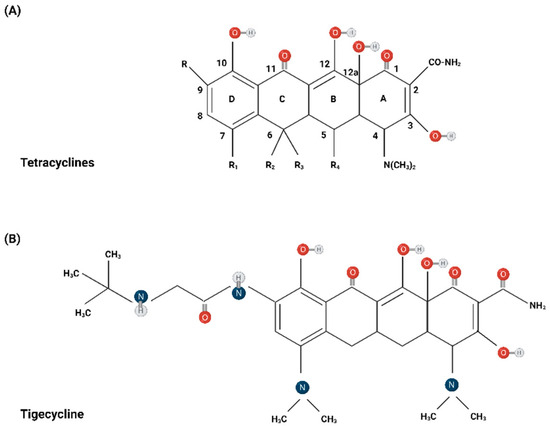
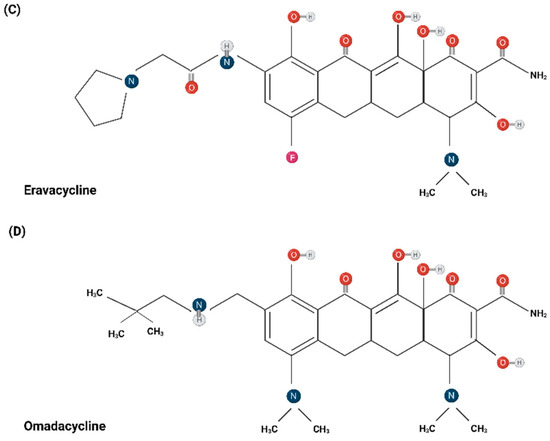
Figure 1. Chemical structures of third-generation tetracyclines
Mechanism of Action
Tetracyclines inhibit bacterial protein synthesis by binding to 16S rRNA within the 30S ribosomal subunit. This interaction prevents aminoacyl-tRNA from entering the A site of the ribosome, thereby preventing the incorporation of amino acids into the growing polypeptide chain.
As a result, translation and protein synthesis are interrupted, leading to inhibition of bacterial growth.
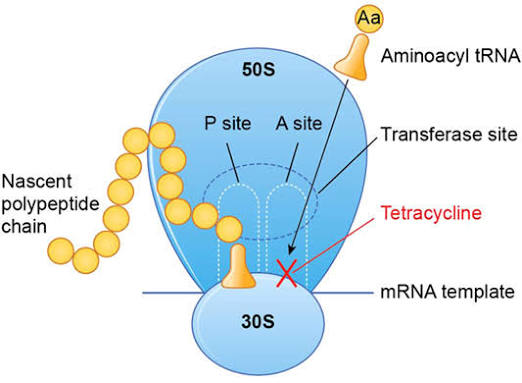
Figure 2. Mechanism of action of tetracycline antibiotics
Mechanisms of Bacterial Resistance
- Active drug efflux is one of the most common resistance mechanisms. Transport proteins such as Tet(A), Tet(B), and Tet(K), as well as efflux systems belonging to the MFS, RND, ABC, MATE, and SMR families, actively export tetracyclines from bacterial cells, reducing intracellular drug concentrations at the site of action.
- Enzymatic inactivation occurs when enzymes, particularly Tet(X), chemically modify tetracycline molecules. These modifications reduce the ability of the antibiotic to bind to the ribosome and thereby diminish antibacterial activity.
- Alteration of the target site may result from mutations in 16S rRNA or in the S10 protein of the 30S ribosomal subunit. These changes reduce tetracycline affinity for the ribosome and consequently impair inhibition of bacterial protein synthesis.
- Reduced outer-membrane permeability is particularly important in Gram-negative bacteria. Changes in the structure or expression of porin channels such as OmpF and OmpC reduce antibiotic entry into the bacterial cell.
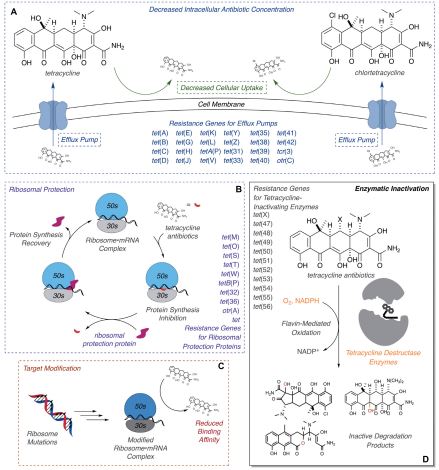
Figure 3. Mechanisms of bacterial resistance to tetracyclines
Adverse Effects
- Gastrointestinal adverse effects are the most common and are generally dose-dependent. Common manifestations include nausea, vomiting, diarrhea, gastrointestinal discomfort, anorexia, constipation, and abdominal distension.
- Effects on teeth and bone: Tetracyclines can chelate calcium ions, potentially causing permanent tooth discoloration, enamel hypoplasia, and impaired bone development. Therefore, these agents are generally avoided during pregnancy and in young children.
- Local and cutaneous reactions: These may include pain or inflammation at the intravenous infusion site, pruritus, rash, and increased sweating.
2. TIGECYCLINE
Antibacterial Spectrum
Against Gram-positive bacteria, tigecycline demonstrates good activity against methicillin-resistant Staphylococcus aureus (MRSA), methicillin-resistant Staphylococcus epidermidis (MRSE), vancomycin-resistant Enterococcus (VRE), and penicillin-resistant Streptococcus pneumoniae.
Against Gram-negative bacteria, tigecycline is active against a range of organisms, including Escherichia coli, Citrobacter freundii, Enterobacter cloacae, Klebsiella, Salmonella, Shigella, Serratia marcescens, and Acinetobacter spp.
The drug also exhibits activity against several anaerobic bacteria, including Bacteroides species such as B. fragilis, B. thetaiotaomicron, B. uniformis, and B. vulgatus, as well as Clostridium species including Clostridioides difficile and Clostridium perfringens.
However, tigecycline has poor activity against Pseudomonas aeruginosa, Morganella morganii, Providencia spp., and some Proteus strains, including Proteus mirabilis, because of intrinsic resistance mechanisms.
Indications
Tigecycline was approved by the FDA in 2005 and by the EMA in 2006 for three major indications: complicated intra-abdominal infections, complicated skin and skin-structure infections, and community-acquired pneumonia.
Its efficacy has been reported to be comparable with imipenem-cilastatin in complicated intra-abdominal infections, non-inferior to vancomycin plus aztreonam in complicated skin infections, and comparable with levofloxacin in community-acquired pneumonia.
Pharmacokinetics
Tigecycline is administered only by intravenous infusion because of its very low oral absorption. Plasma protein binding is approximately 71–89%, and the drug is widely distributed into tissues, particularly the lungs, liver, and kidneys.
Its elimination half-life is prolonged, at approximately 55.8 hours.
Tigecycline undergoes minimal hepatic metabolism and is eliminated mainly unchanged through the biliary route. Approximately 59% of the administered dose is excreted in feces and 32% in urine.
Its pharmacokinetics are minimally affected by age, sex, race, or renal impairment. Dose adjustment is generally not required in patients with mild to moderate hepatic impairment.
3. ERAVACYCLINE
Antibacterial Spectrum
Against Gram-positive bacteria, eravacycline has good activity against MRSA and VRE. It has also been reported to exhibit greater activity against S. aureus than omadacycline.
Against Gram-negative bacteria, eravacycline demonstrates potent activity against ESBL- or carbapenemase-producing Enterobacteriaceae, multidrug-resistant Acinetobacter baumannii, and Stenotrophomonas maltophilia, including strains resistant to levofloxacin or trimethoprim-sulfamethoxazole.
Eravacycline is also active against a wide range of anaerobic organisms, including C. difficile, even the epidemic RT027 strain.
In addition, the drug has shown potential activity against rapidly growing nontuberculous mycobacteria, including Mycobacterium abscessus, M. chelonae, and M. immunogenum. It also demonstrates good in vitro activity against Helicobacter pylori, including tetracycline-resistant strains.
However, eravacycline does not have meaningful activity against P. aeruginosa.
Indications
Eravacycline was approved by the FDA in 2018 for the treatment of complicated intra-abdominal infections in adults.
Approval was based on the phase III IGNITE 1 and IGNITE 4 clinical trials, which demonstrated efficacy comparable with ertapenem and meropenem.
Pharmacokinetics
Eravacycline has relatively low oral bioavailability of approximately 28% and is therefore primarily administered intravenously.
Plasma protein binding is approximately 79–90%, and the drug is widely distributed throughout the body, with a volume of distribution of approximately 3.3–4.2 L/kg.
Intravenous eravacycline exhibits linear pharmacokinetics. Its elimination half-life generally ranges from 22 to 34 hours. Mean total clearance is approximately 13.5 L/h, with renal elimination accounting for approximately 16%.
4. OMADACYCLINE
Antibacterial Spectrum
Omadacycline has broad-spectrum antibacterial activity, with particularly good activity against multidrug-resistant Gram-positive bacteria.
It is active against MRSA, penicillin- or macrolide-resistant S. pneumoniae, VRE, viridans group streptococci, and beta-hemolytic streptococci.
Against Gram-negative bacteria, omadacycline exhibits activity against selected pathogens such as E. coli, Klebsiella oxytoca, and Citrobacter spp. It has also shown potential for the treatment of urinary tract infections caused by ESBL-producing Enterobacterales, particularly E. coli.
Omadacycline also has activity against C. difficile, H. pylori, and certain Mycobacterium species. It is active against M. abscessus and has shown potential activity against both drug-susceptible and multidrug-resistant M. tuberculosis.
However, omadacycline has no meaningful activity against P. aeruginosa and only limited activity against Proteus species.
Indications
Omadacycline was approved by the FDA in 2018 for the treatment of two bacterial infections in adults:
- Community-acquired bacterial pneumonia (CABP)
- Acute bacterial skin and skin-structure infections (ABSSSI)
Clinical trials demonstrated that omadacycline had efficacy comparable with moxifloxacin in CABP and with linezolid in ABSSSI.
Pharmacokinetics
Omadacycline is available in both oral and intravenous formulations.
Its oral bioavailability is approximately 34.5% and is markedly reduced when administered with food, milk, or calcium-containing products.
Plasma protein binding is approximately 21%, and the drug distributes widely into the lungs, liver, and kidneys, where tissue concentrations are often higher than those in blood.
The elimination half-life of omadacycline is approximately 13–16 hours.
It undergoes minimal metabolism through the cytochrome P450 system, resulting in a relatively low potential for drug-drug interactions, and is eliminated primarily through the feces.
Dose adjustment is generally not required in patients with hepatic or renal impairment.
5. SYNERGISTIC BENEFITS OF COMBINATION THERAPY INVOLVING THIRD-GENERATION TETRACYCLINES
Combining newer-generation tetracyclines with other antimicrobial agents may enhance bactericidal activity, reduce the emergence of resistance, and expand therapeutic options for multidrug-resistant infections.
- Multidrug-resistant Gram-positive bacteria: Omadacycline combined with rifampicin has shown potential in the treatment of MRSA osteomyelitis. This combination produces rapid and sustained bactericidal activity against S. aureus and S. epidermidis in biofilms while limiting the emergence of rifampicin resistance.
- Multidrug-resistant Gram-negative bacteria: Tigecycline combined with amikacin or gentamicin has demonstrated synergistic activity against carbapenem-resistant K. pneumoniae. Aminoglycosides interfere with protein synthesis and bacterial membrane integrity, thereby enhancing tigecycline activity and reducing the risk of resistant mutations.
Eravacycline has also demonstrated synergistic effects when combined with polymyxin B against E. coli and with ceftazidime against A. baumannii. Omadacycline combined with sulbactam has shown high activity against carbapenem-resistant A. baumannii.
- Nontuberculous mycobacterial infections: Particularly in M. abscessus infections, omadacycline may enhance the activity of clarithromycin and demonstrate synergy when combined with rifampicin. Combinations with cefoxitin, linezolid, or carbapenems have also shown early bactericidal activity.
Tigecycline combined with teicoplanin has demonstrated activity against multiple M. abscessus strains.
- Antifungal activity: In addition to antibacterial effects, some combinations have demonstrated antifungal activity. Tigecycline combined with fluconazole has shown potent activity against Candida albicans biofilms.
Eravacycline combined with fluconazole has also been investigated for its potential to inhibit fungal DNA replication and cell division.
6. CONCLUSION
Third-generation tetracyclines play an important role in the treatment of multidrug-resistant infections, particularly in hospital settings.
Through structural modification, these agents have enhanced affinity for the bacterial ribosome and can overcome common tetracycline resistance mechanisms such as active efflux and ribosomal protection.
Compared with traditional tetracyclines, newer-generation agents generally have a broader antibacterial spectrum. Approved indications include complicated intra-abdominal infections, skin and skin-structure infections, and community-acquired pneumonia.
However, these agents should be used with appropriate caution because of adverse effects involving the gastrointestinal tract, teeth, and bones, as well as warnings regarding an increased risk of mortality, particularly with tigecycline.
REFERENCES
- Kounatidis D, Dalamaga M, Grivakou E, Karampela I, Koufopoulos P, Dalopoulos V, Adamidis N, Mylona E, Kaziani A, Vallianou NG. Third-Generation Tetracyclines: Current Knowledge and Therapeutic Potential. Biomolecules. 2024;14(7):783. https://doi.org/10.3390/biom14070783
- Markley JL, Wencewicz TA. Tetracycline-Inactivating Enzymes. Frontiers in Microbiology. 2018;9:1058. https://doi.org/10.3389/fmicb.2018.01058
- Graber EM. Treating acne with the tetracycline class of antibiotics: A review. Dermatological Reviews. 2021;2:321–330. https://doi.org/10.1002/der2.49
Kim Ngoc Son, MSc
Nguyen Hieu Minh, MSc
